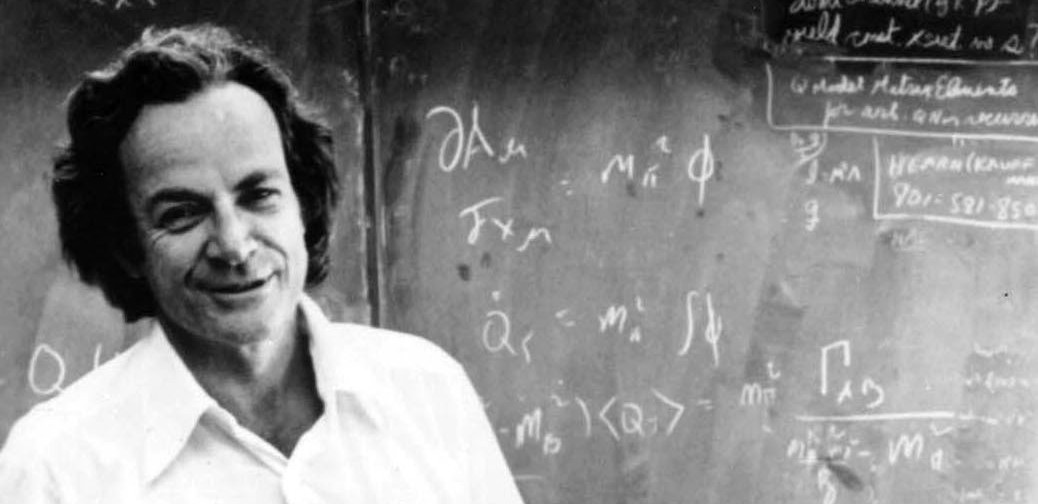
In 1987, Chris Cole posted a message to the sci.crypt Usenet group:
When I was a graduate student at Caltech, Professor Feynman showed me three samples of code that he had been challenged with by a fellow scientist at Los Alamos and which he had not been able to crack. I also was unable to crack them. I now post them for the net to give it a try.
The first, marked “Easier,” was this:
MEOTAIHSIBRTEWDGLGKNLANEA
INOEEPEYSTNPEUOOEHRONLTIR
OSDHEOTNPHGAAETOHSZOTTENT
KEPADLYPHEODOWCFORRRNLCUE
EEEOPGMRLHNNDFTOENEALKEHH
EATTHNMESCNSHIRAETDAHLHEM
TETRFSWEDOEOENEGFHETAEDGH
RLNNGOAAEOCMTURRSLTDIDORE
HNHEHNAYVTIERHEENECTRNVIO
UOEHOTRNWSAYIFSNSHOEMRTRR
EUAUUHOHOOHCDCHTEEISEVRLS
KLIHIIAPCHRHSIHPSNWTOIISI
SHHNWEMTIEYAFELNRENLEERYI
PHBEROTEVPHNTYATIERTIHEEA
WTWVHTASETHHSDNGEIEAYNHHH
NNHTW
Jack Morrison of NASA’s Jet Propulsion Laboratory had it solved the next day: “It’s a pretty standard transposition: split the text into 5-column pieces, then read from lower right upward.” This yields the opening of Chaucer’s Canterbury Tales:
WHANTHATAPRILLEWITHHISSHOURESSOOTET
HEDROGHTEOFMARCHHATHPERCEDTOTHEROOT
EANDBATHEDEVERYVEYNEINSWICHLICOUROF
WHICHVERTUENGENDREDISTHEFLOURWHANZE
PHIRUSEEKWITHHISSWEETEBREFTHINSPIRE
DHATHINEVERYHOLTANDHEETHTHETENDRECR
OPPESANDTHEYONGESONNEHATHINTHERAMHI
SHALVECOURSYRONNEANDSMALEFOWELESMAK
ENMELODYETHATSLEPENALTHENYGHTWITHOP
ENYESOPRIKETHHEMNATUREINHIRCORAGEST
HANNELONGENFOLKTOGOONONPILGRIM
But the other two ciphers have never been solved, despite 30 years of trying. Here they are:
#2 (“Harder”)
XUKEXWSLZJUAXUNKIGWFSOZRAWURORKXAOS
LHROBXBTKCMUWDVPTFBLMKEFVWMUXTVTWUI
DDJVZKBRMCWOIWYDXMLUFPVSHAGSVWUFWOR
CWUIDUJCNVTTBERTUNOJUZHVTWKORSVRZSV
VFSQXOCMUWPYTRLGBMCYPOJCLRIYTVFCCMU
WUFPOXCNMCIWMSKPXEDLYIQKDJWIWCJUMVR
CJUMVRKXWURKPSEEIWZVXULEIOETOOFWKBI
UXPXUGOWLFPWUSCH
#3 (“New Message”)
WURVFXGJYTHEIZXSQXOBGSVRUDOOJXATBKT
ARVIXPYTMYABMVUFXPXKUJVPLSDVTGNGOSI
GLWURPKFCVGELLRNNGLPYTFVTPXAJOSCWRO
DORWNWSICLFKEMOTGJYCRRAOJVNTODVMNSQ
IVICRBICRUDCSKXYPDMDROJUZICRVFWXIFP
XIVVIEPYTDOIAVRBOOXWRAKPSZXTZKVROSW
CRCFVEESOLWKTOBXAUXVB
Feynman, apparently, couldn’t break them either.
03/25/2025 UPDATE: The remaining two ciphers have now been solved.



 .
.