
“However often you may have done them a favor, if you once refuse they forget everything except your refusal.” — Pliny the Younger
Quotations
Unquote
“Little minds are interested in the extraordinary; great minds in the commonplace.” — Elbert Hubbard
Notes
Excerpts from the notebooks of English belletrist Geoffrey Madan (1895-1947):
Two impressions remaining, after a life of scientific research:
1. The inexhaustible oddity of nature.
2. The capacity of the human system for recovery.
— J.B.S. Haldane
“With people like you, love only means one thing.”
“No, it means twenty things: but it doesn’t mean nineteen.”
— Arnold Bennett’s Journal
“I simply ignored an axiom.” — Einstein, on Relativity
“Nowhere probably is there more true feeling, and nowhere worse taste, than in a churchyard.” — Benjamin Jowett
Happiness, only a by-product.
The fine flower of stupidity blossoms in the attempt to appear less stupid.
Boy, wanting to be a “retired business man.”
“Stand on the Right — and let others pass you.” — Directions on an Underground Escalator
“My sad conviction is that people can only agree about what they’re not really interested in.” — Bertrand Russell, New Statesman, 1 July 1939
The doctrine of omnipotence means that life is a sham fight with evil.
“All men wish to have truth on their side: but few to be on the side of truth.” — Archbishop Richard Whately
“Half-knowledge is very communicable; not so knowledge.” — Mary Coleridge
“Mastery often passes for egotism.” — Goethe
Unquote
“No thoroughly occupied man was ever yet very miserable.” — Letitia Elizabeth Landon
Perspective
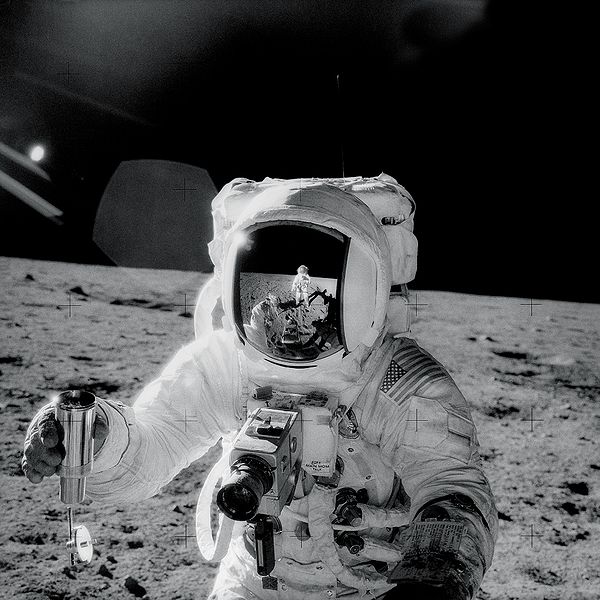
“It was hard for me to believe. I would look down and say, ‘This is the moon, this is the moon,’ and I would look up and say, ‘That’s the Earth, that’s the Earth,’ in my head. So it was science fiction to us even as we were doing it.” — Alan Bean, Apollo 12
Unquote
“In all education the main cause of failure is staleness.” — Alfred North Whitehead
Choosing

“Study hard what interests you the most in the most undisciplined, irreverent and original manner possible.” — Richard Feynman
“A man ought to read just as inclination leads him; for what he reads as a task will do him little good.” — Samuel Johnson
“Read what interests you. If Scott does not interest you and Dickens does, drop Scott and read Dickens. You need not be any one’s enemy; but you need not be a friend with everybody. This is as true of books as of persons. For friendship some agreement in temperament is quite essential.” — Lyman Abbott
Unquote
“The most dangerous food is wedding cake.” — James Thurber
Unquote
“Silence is not always tact and it is tact that is golden, not silence.” — Samuel Butler
“Fear Is the Bane of the Happy”


Maxims of the French woman of letters Diane de Beausacq (1829-1899):
- To say of a man: he never grows angry when he is scolded, never scolds when he is angry, is to give him a good character.
- There are two ways of diminishing the tedium of a tedious task — to do it with all your might, or in the company of one you love.
- Those who die a lingering death are never so bitterly lamented; they have been mourned in advance.
- Honor exists but for the honorable.
- There are people who spend their lives in searching in the conduct of others for some cause for anger.
- Light folk take light things seriously and serious things lightly.
- Trust not your mistrust; you will be more often deceived by it than by mankind.
- Doubt poisons everything but destroys nothing.
- To the noble, ability is a merit — to the mean, a defect.
- Of the lives of others, we see only the pretexts.
- Of two duties, it would seem that the more irksome is ever the more imperious.
- If God knows all, I do not fear him.
- To spoil children is to deceive them concerning life; life herself does not spoil us.
- To be loved and yet unhappy savors of ingratitude.
- Men resemble one another most in the heart and differ most in character; we can speak of the human heart, but not of the human character.
- We are inclined to imagine that, in making a sacrifice, we are bound to do good. Self-denial, like selfishness, has its moments of blindness.
- Following a long and difficult path, we penetrate to the root of things; then, when we utter the truth we have arrived at, we are astonished to find that we are not always understood: it is the recollection of the path that leads to it that renders a truth obvious.
- The less a man thinks of himself, the less unhappy will he be.
“Strong reasons determine our resolves, slight reasons arrest us, on the eve of executing them. Most of us have looked forward eagerly to going a journey, and yet, when the hour of departure has come, many a one has been stopped by the fear of the bad cooking and comfortless beds of the inn.”